Why Healthy Love Can Feel Wrong
Grappling with the Wound to the Image, and our inherited lenses
One of the patterns I encounter most often in my practice is people who find themselves in a deeply confusing place.
They are with someone who genuinely loves them. They feel safer than they ever have. The relationship is healthier than anything they have known before. And yet, they cannot settle.
Part of them recognizes they have found something precious. Another part wants to run.
They tell themselves things like, Maybe they're not attractive enough. Maybe they're too ordinary. Maybe I just don't feel enough chemistry. Maybe they're not really my person.
On the surface, these seem like reasonable concerns. But when we begin to look more deeply, another story often emerges.
Many of these clients were raised in family systems where image mattered more than emotional reality. I'm not necessarily talking about parents with Narcissistic Personality Disorder. Rather, I'm referring to narcissistic family dynamics; homes in which appearances, achievement, reputation, or status were valued more highly than authenticity, vulnerability, or emotional connection.
These are often families that appear admirable from the outside. Everything looks close to perfect. But beneath the surface there may be loneliness, emotional neglect, criticism, manipulation, or even abuse. As long as the family image remains protected, the deeper wounds are rarely acknowledged, and even more rarely healed.
Growing up in an environment like this quietly teaches a child an important lesson:
How things look matters more than how they feel.
Over time, that lesson becomes internalized. Even years later and long after leaving home, people can find themselves evaluating relationships through an inherited lens they didn't consciously choose.
Without realizing it, they begin asking questions like:
What would my family think of this person?
Does this relationship look impressive?
Would people admire us as a couple?
Does this partner elevate my social standing?
These questions feel deeply personal, but often they aren't. They are inherited.
Meanwhile, another part of the psyche is asking entirely different questions:
Do I feel safe here?
Can I be fully myself?
Do I feel seen?
Is my heart becoming larger in this relationship?
These are very different ways of evaluating love.
From a depth psychological perspective, I don't believe it is accidental when these two ways of seeing collide.
The word psyche comes from the Greek and means both soul and butterfly. Just as a butterfly is the transformed expression of the caterpillar, I see the work of depth psychology as the work of transformation—of becoming more fully who we truly are.
When the soul is ready to outgrow inherited patterns, it has a remarkable way of drawing us toward exactly the experiences capable of transforming us.
One of those experiences is love.
Very often, the soul seems to bring us into relationship with someone who doesn't fit the inherited template.
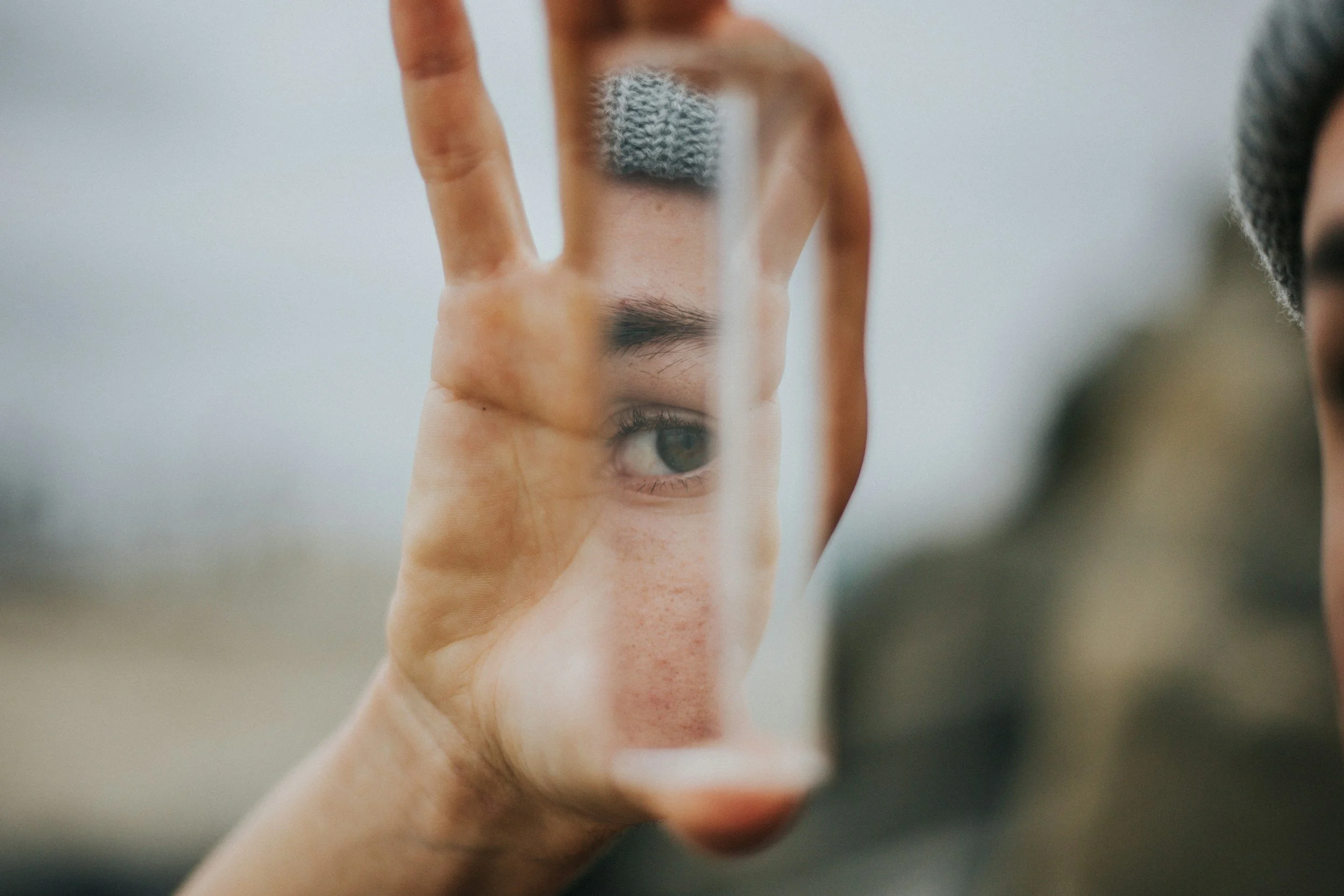
There has to be what I call a wound to the image.
By this I mean that something about this person disrupts the old values we unconsciously inherited. Perhaps they come from a different social class. Perhaps they have a less prestigious career. Perhaps they're older than we imagined we'd marry. Perhaps they're quieter, less conventionally attractive, divorced, deeply emotional, or simply unlike the person we always imagined ourselves ending up with.
Whatever it is, they don't quite fit the picture.
One part of us insists, “This can't be my person because of...”
And yet another part cannot walk away.
This is often where I introduce the story of Skeleton Woman from Jungian analyst Clarissa Pinkola Estés' Women Who Run with the Wolves.

In the story, a fisherman sets out simply hoping to catch a fish. Instead, he accidentally hooks the skeleton of a woman who has lain on the ocean floor for years. Terrified, he rows frantically to shore and runs as fast as he can, but Skeleton Woman remains tangled in his fishing line, following him wherever he goes.
Eventually, exhausted, he stops running.
Instead of continuing to flee, he patiently untangles her bones from his line, treating them with tenderness and care. Through his tears and his willingness to remain present with what first terrified him, Skeleton Woman is restored to life. By morning, they awaken as partners.
Estés understands this as a story about real romantic love.
Real love rarely arrives looking exactly as we imagined it would.
Often it first appears as something that threatens our carefully constructed image of ourselves and our lives. It asks us to surrender fantasies, expectations, and inherited definitions of what love should look like.
It wounds the image.

But if we stay, if we resist the impulse to flee, and instead patiently untangle our fears, projections, and inherited beliefs, we sometimes discover that what seemed frightening was actually the doorway to the very intimacy we have been longing for all along.
I often wonder whether what we call "falling in love" is sometimes the soul's refusal to let us remain loyal to an inherited image at the expense of a living heart.
Healing may begin the moment we stop asking, "Does this relationship look right?"
and begin asking things like:
"Am I deeply loved here?"
"Can I be fully myself?"
"Do I feel emotionally safe?"
"Is my heart becoming larger in this relationship?"
Those questions may not lead us to the relationship that looks the most impressive from the outside.
But they just might lead us to the truest one.